David A. Riethmiller
Software Engineer

 LinkedIn: David Riethmiller
 GitHub: driethmiller
  Resume
 ABOUT ME
I'm a senior software engineer in the Greater Baltimore area with experience in scientific software development, data management, and web interface design.
During graduate school, I modeled galaxy evolution by comparing computer-generated calculations with real x-ray observations. Although I was drawn to the science, I found the programming more fulfilling and accepted a software developer position with a NASA contractor.
I then worked with astronomers and fellow software developers on the joint NASA-JAXA x-ray satellite mission Astro-H/Hitomi. My primary contributions included onboard data-reduction scripts and a simulator tool that projected expected telescope output for a selected target, helping astronomers prepare observing-time proposals. The mission launched in February 2016, marking a meaningful career milestone that connected my long-standing fascination with space and technology to real-world mission work.
In my current role, I maintain a web-based data interface for the Office of Safety and Mission Assurance at NASA headquarters. My specialty is accommodating unconventional or unique software design requests from the NASA customer and integrating those new functionalities into the team's battery of available features. My approach is never to claim "we can't do that," but rather, "what's the priority here, and how should we allocate resources to make this happen?" This mentality led the team to receive Goddard Space Flight Center's Safety and Mission Assurance Award of Excellence in 2020, and the Robert H. Goddard Award for Quality and Process Improvement in 2021.
When I'm not writing new software or admiring the night sky, I might be found composing piano music, building furniture in the wood shop, or undertaking the duties and delights of new parenthood.
See my work experience and screenshots from a few sample software projects below.
WORK EXPERIENCE (click to expand)

May 2016 - Present    |
CACI (@ NASA GSFC), Senior Software Engineer XML/HTML CSS JavaScript/JQuery PostgreSQL Node.js + React Software Assurance Relational Databases Debugging Data Archive Management Communicating complicated tech concepts to end users
Working in Goddard Space Flight Center's Safety and Mission Assurance
Directorate, using a software platform called Meta (which predates Facebook-Meta).
Through this platform, based in HTML, XML, JavaScript, CSS, and proprietary
object-oriented constructs, I've developed and extended multiple software
packages that assist Goddard's 30+ missions in maintaining project safety and
reliability, replacing antiquated legacy flight and ground software to adhere to
updated software assurance requirements. My own specialty has developed into
accommodating unconventional software design requests from the customer, and
integrating these new functionalities into the team's battery of available features.
Examples of software packages include a problem reporting and risk-tracking
application to ensure project safety (in both hardware and software systems), an
application that ensures data quality and security on controlled documents, and a
package that manages launch readiness dates, launch vehicles, project personnel,
etc. for the NASA customer. Intimately familiar with software development
methodologies, as well as safety, assurance, and reliability policies; our software products
are not released until completing rigorous review and testing process.
Spring 2026 - currently in the process of rebuilding the entire Meta system as an AI-assisted Node.js + React platform, using a PostgreSQL database as the back end. This contract with NASA changed over multiple times through several companies (Axient LLC, Millenium Engineering and Integration, ARES Technical Systems), but the job description remained the same. |
Aug 2013 - May 2016
|
Wyle ST&E Group (@ NASA GSFC), Scientific Software Developer C/C++ Perl Python Fortran sh/bash Debugging Git / Version Control Agile / Sprint Cycles
Worked with the NASA customer to provide support for the Astro-H/Hitomi X-ray
satellite launched in February 2016. In addition to developing a Perl/C++ pipeline
of data reduction scripts, wrote a simulator tool in C that fabricates full-scale
X-ray observations when provided real input source parameters, and outputs
expected data products. Software solutions often required innovative development
methodologies in order to meet project requirements; our team used the "Agile"
approach to development, where software assurance was met via product build
periods subdivided into "sprints," with planning, daily scrum, and sprint review on
each incremental software release. Verification and validation in the Agile process
satisfied level-3 CMMI (Capability Maturity Model Integration) requirements.
|
Aug 2006 - Aug 2013
|
Ohio University, Graduate Research Assistant C/C++ IDL Python sh/bash Parallel Processing Code Optimization Debugging
Studied evolution of elliptical galaxies by modifying GADGET2, a fluid
hydrodynamics code written in C, to model galactic gas and dark matter as millions of particles.
The simulation advanced through time and moved the particles according to the
appropriate force law. Code was optimized for parallel computing by spreading
bookkeeping for the particles across multiple nodes of a supercomputer.
As a secondary project, investigated rotation rates of near-earth asteroids (NEAs) via an optical observation campaign at the MDM 2.4-Meter Telescope at Kitt Peak National Observatory. Took 30-second exposures of NEAs over a period of 5-6 hours. By extracting asteroid brightness from each exposure, and assuming that a different reflective face was presented as the asteroid rotated over time, determined the period of rotation using the asteroid's light curve. |
Summer 2005
|
Georgia Institute of Technology, Research Assistant sh/bash
Used Fourier fitting software to refine light curve data for eclipsing
binary stars.
|
2002 - 2006
|
Carnegie Mellon University, Research Assistant X-SPEC sh/bash
Catalogued ultra luminous X-ray data from the Chandra X-Ray Observatory and
XMM-Newton Observatory. Used X-SPEC modeling software.
|
PROJECTS (click to expand)
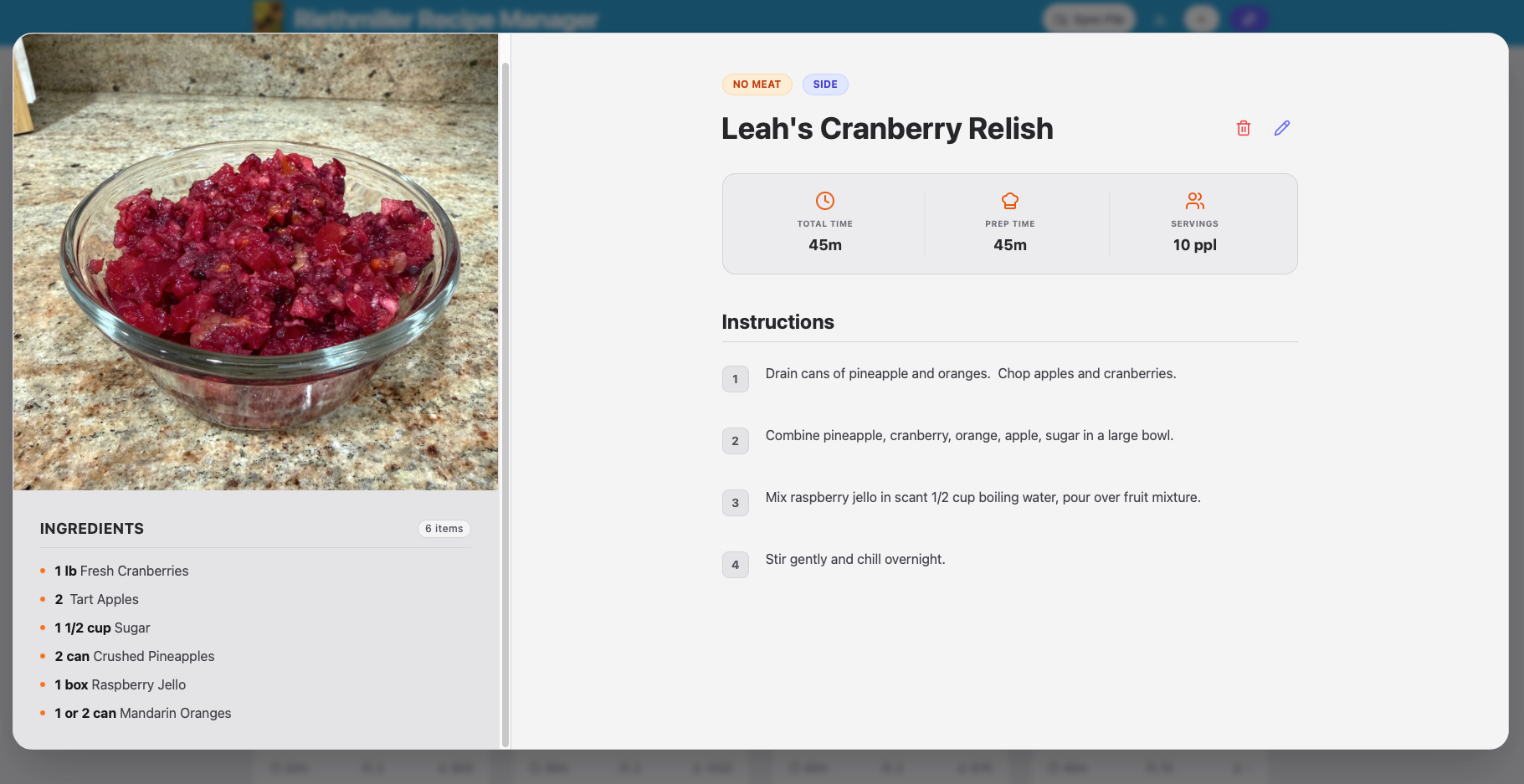
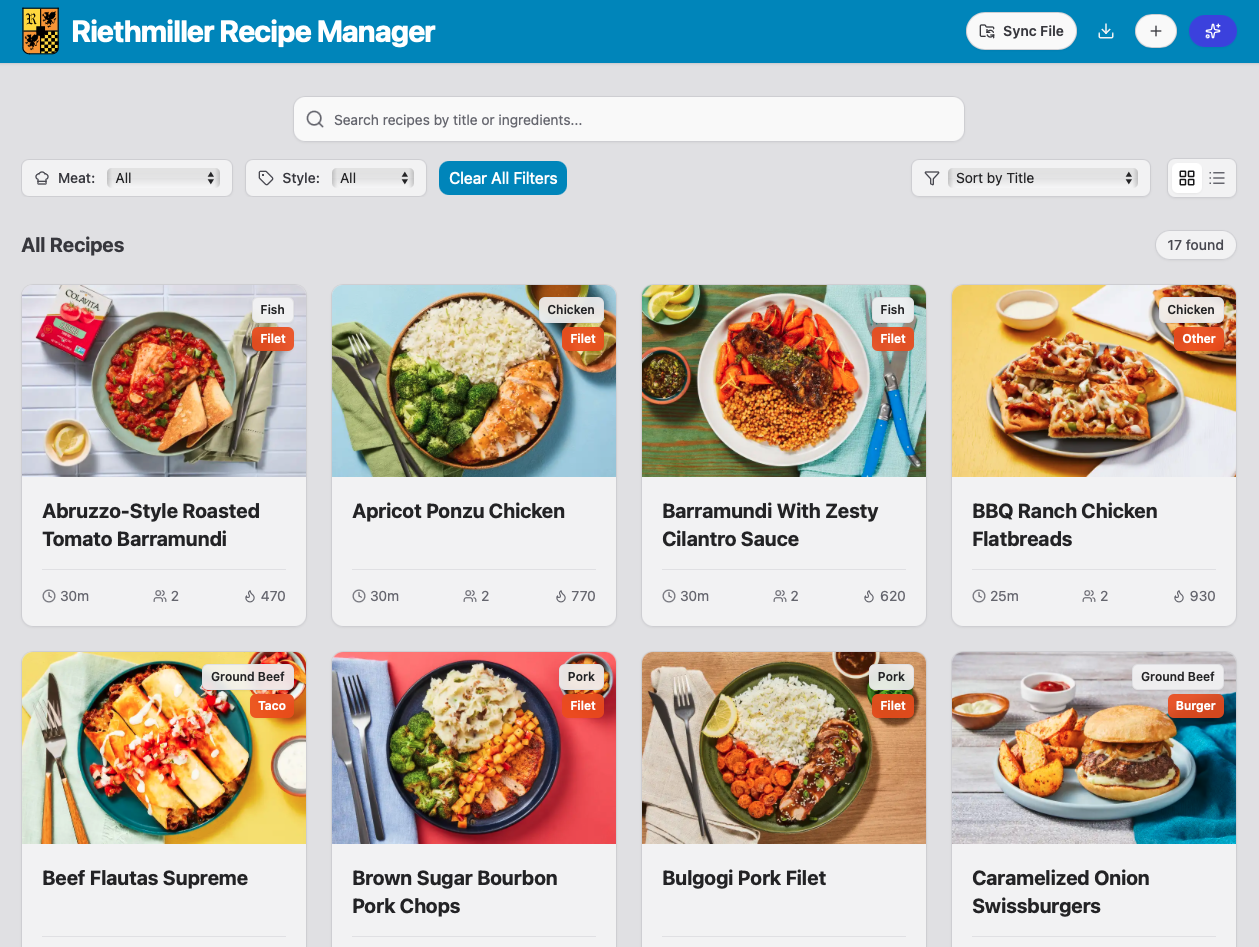 Personal Project: Riethmiller Recipes - 2026
This began as an exercise to learn how to leverage an AI model with Node.js and the React
javascript library, and turned into
a useful tool. Instead of a giant binder full of physical recipe cards, my family now
keeps a tablet in the kitchen, running this interface. We can search the recipe
database to return results by desired ingredients or by meal style (taco, burger,
bowl, filet, side, etc.).
- Domain: Home Productivity / AI-Assisted Recipe Management
- Tech Stack: Node.js, React, JavaScript, AI Model Integration
Background & Personal Use Case
- Originally developed as a hands-on exercise to learn AI model integration with Node.js and the React JavaScript library, the project evolved into a practical household recipe-management application.
- Replaced a large physical binder of recipe cards with a tablet-based kitchen interface that allows family members to browse and search recipes digitally.
Key Features & Engineering Capabilities
- AI-Assisted Recipe Search: Leverages an AI model to support natural-language recipe discovery based on desired ingredients, meal type, or cooking style.
- React-Based Kitchen Interface: Provides a tablet-friendly front end designed for quick browsing and use in a kitchen environment.
- Searchable Recipe Database: Allows users to return recipes by ingredient combinations or categories such as tacos, burgers, bowls, filets, sides, and other meal styles.
Operational Impact
- Improves day-to-day meal planning by replacing paper-based recipe storage with a searchable, AI-assisted digital workflow accessible directly from the kitchen.
| https://github.com/driethmiller/Riethmiller-Recipe-Manager | ||
|
|
|
|
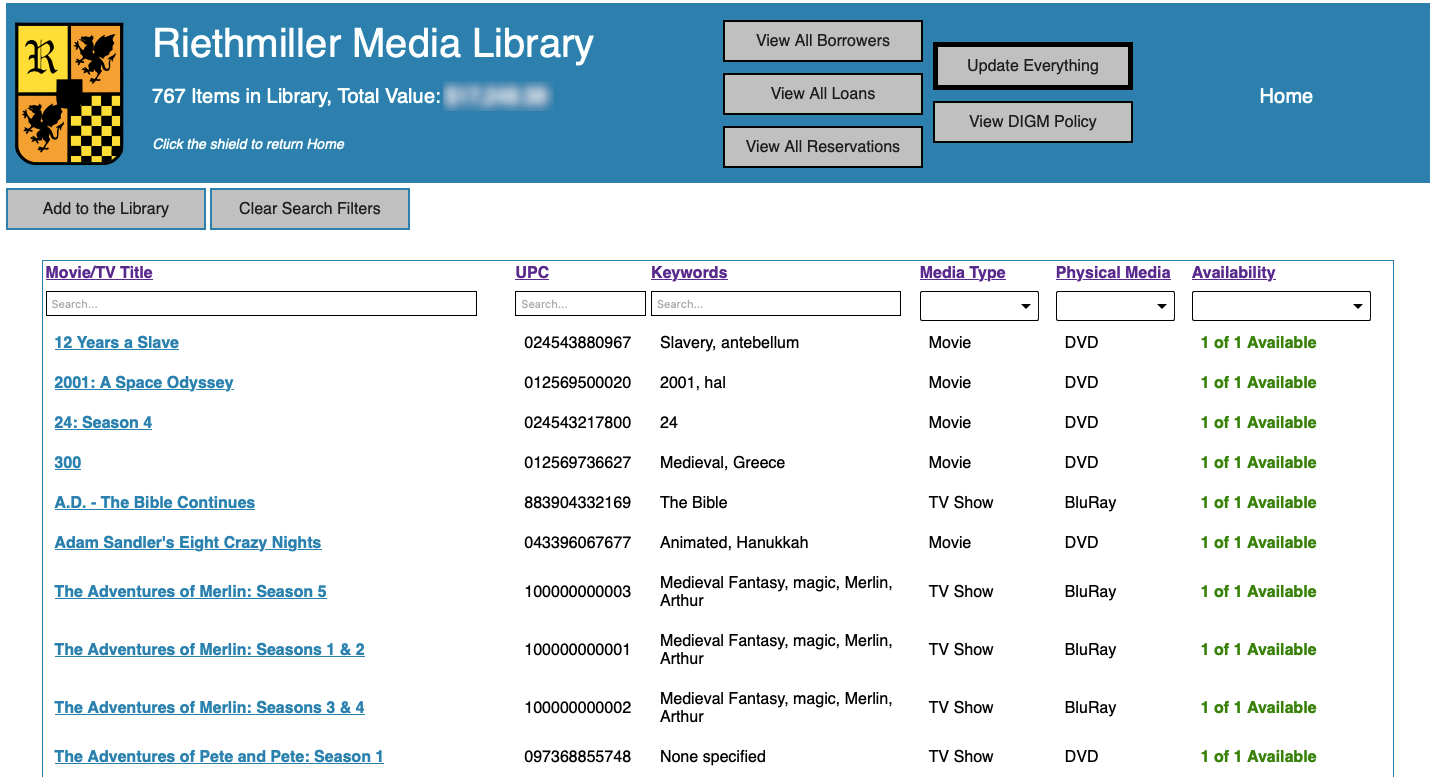
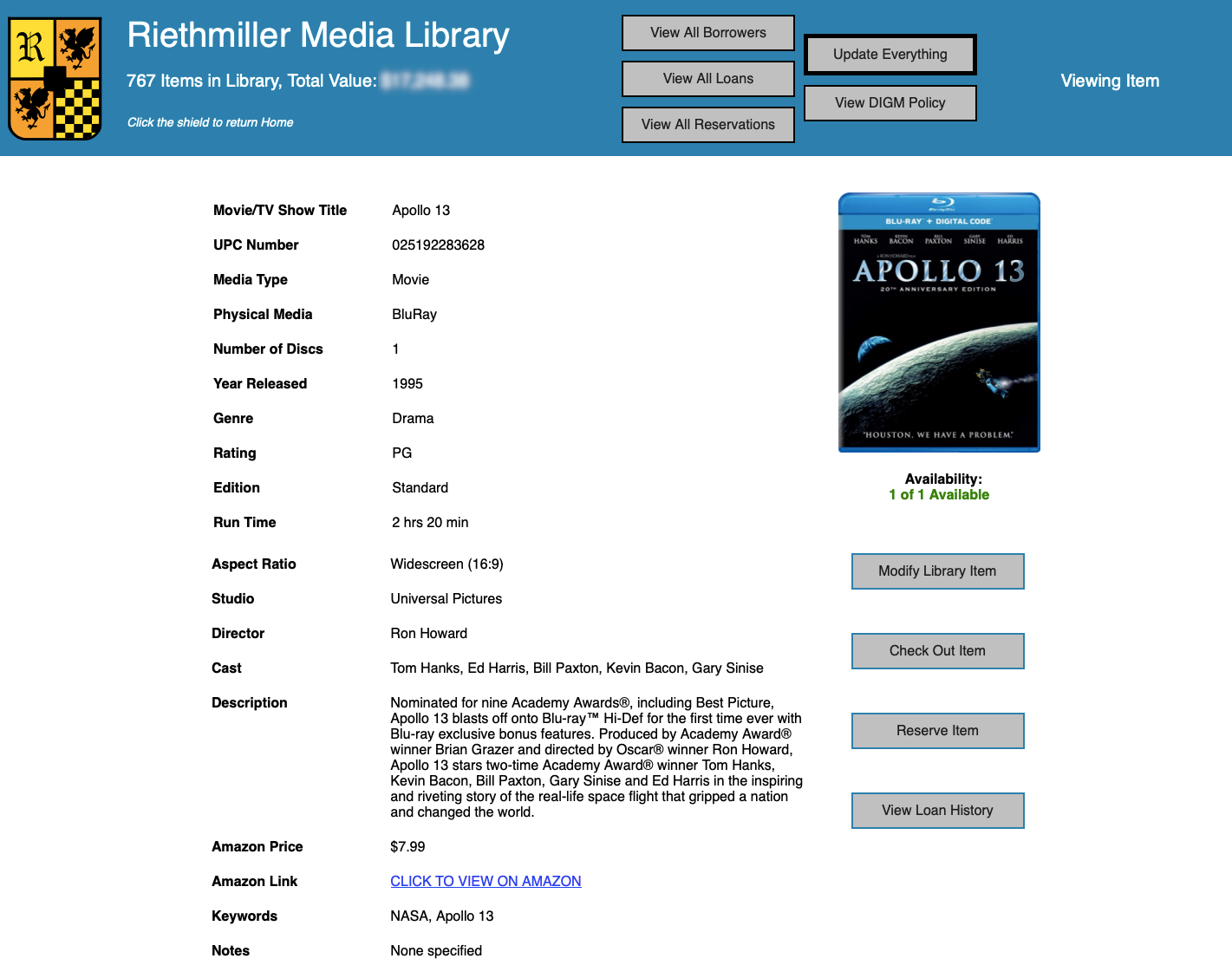
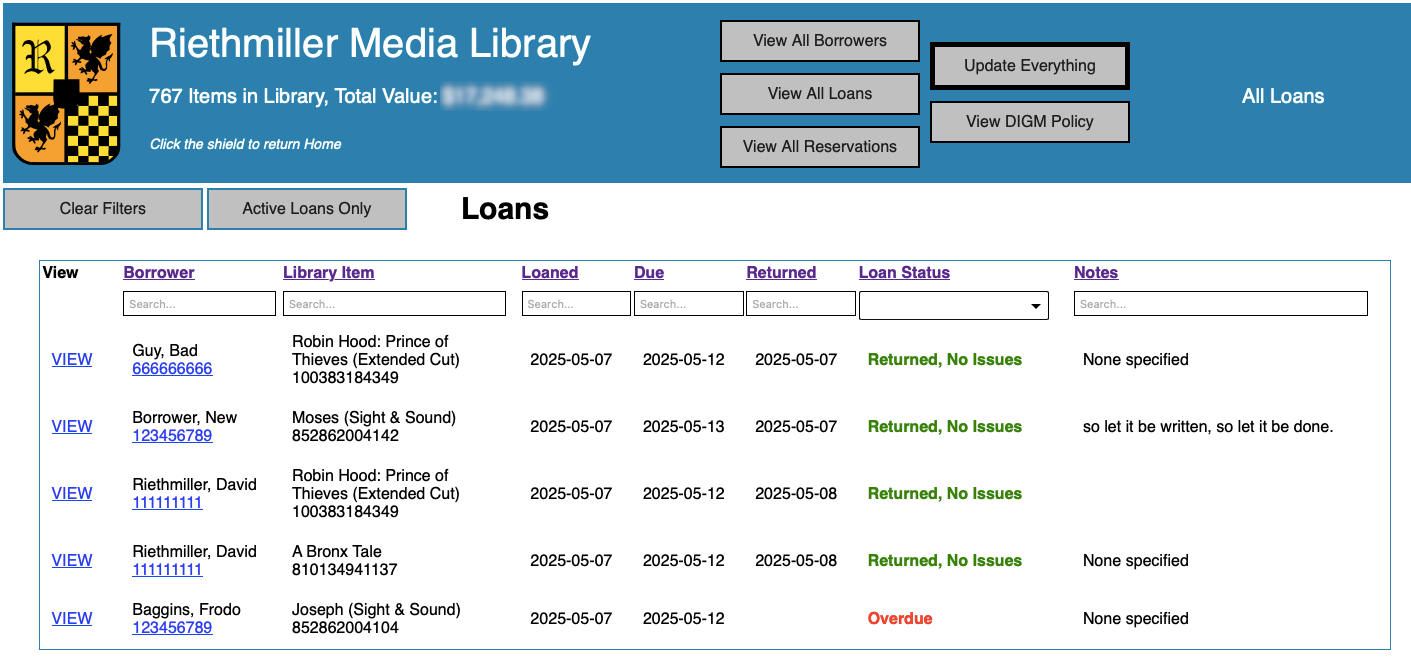
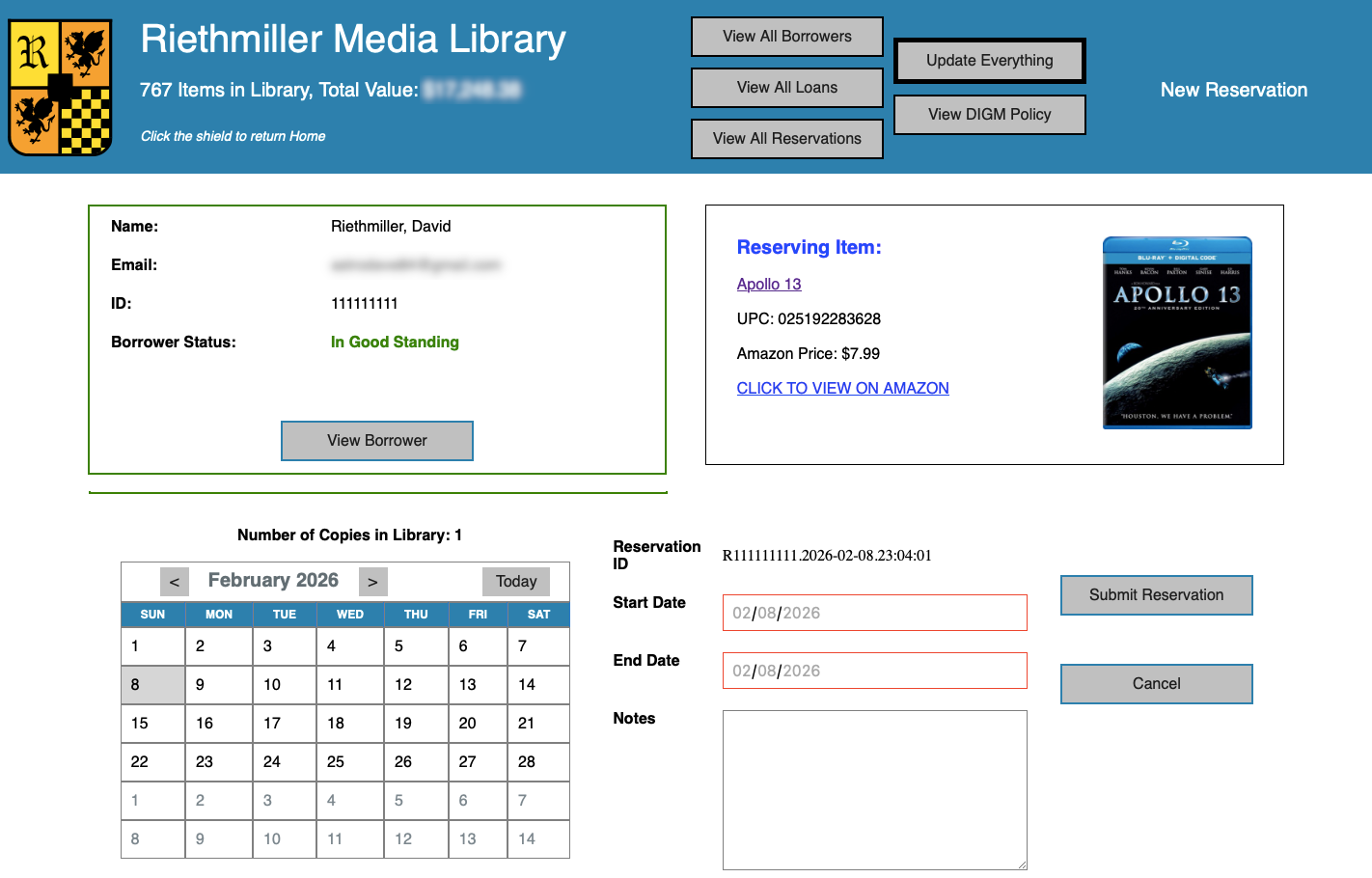 Personal Project: Riethmiller DVD/Blu-Ray Library - 2025
My wife teaches digital media and film studies at a nearby community college, and wanted
to make our personal library of DVDs and BluRay discs available to her students. To keep
track of our collection, I wrote a check-in/check-out library system, customized to our
particular needs, using an SQL database with a PHP front-end. The library makes use of table
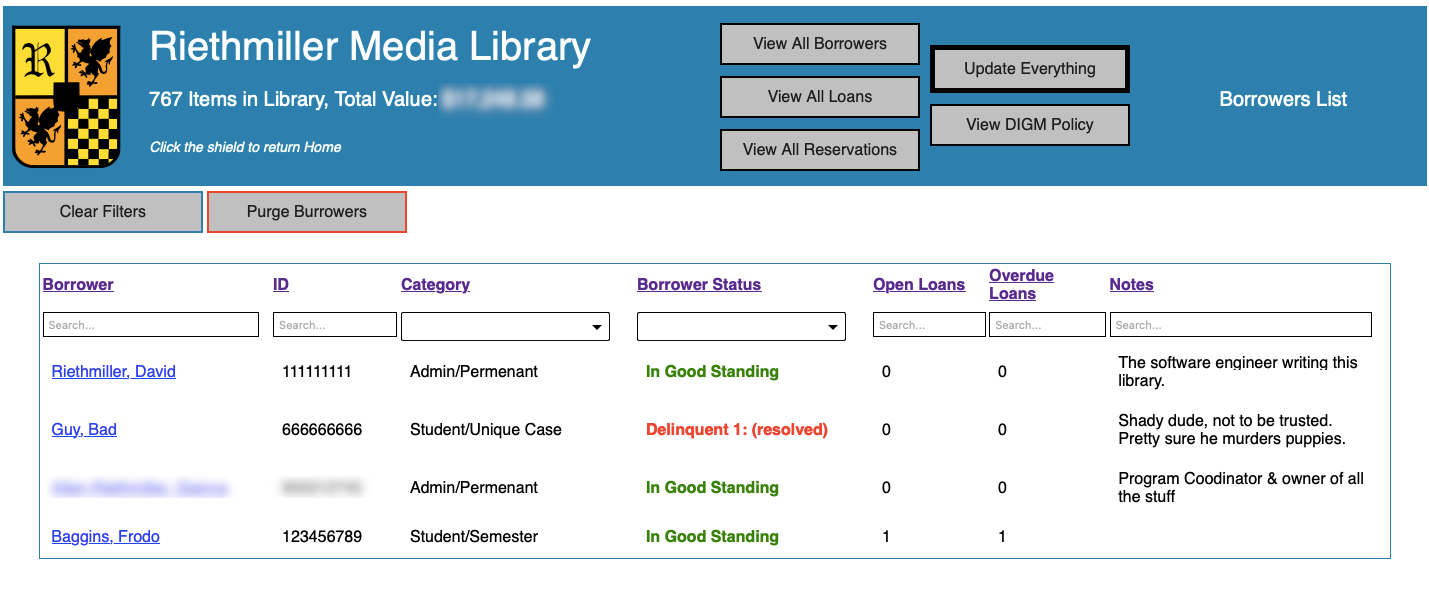
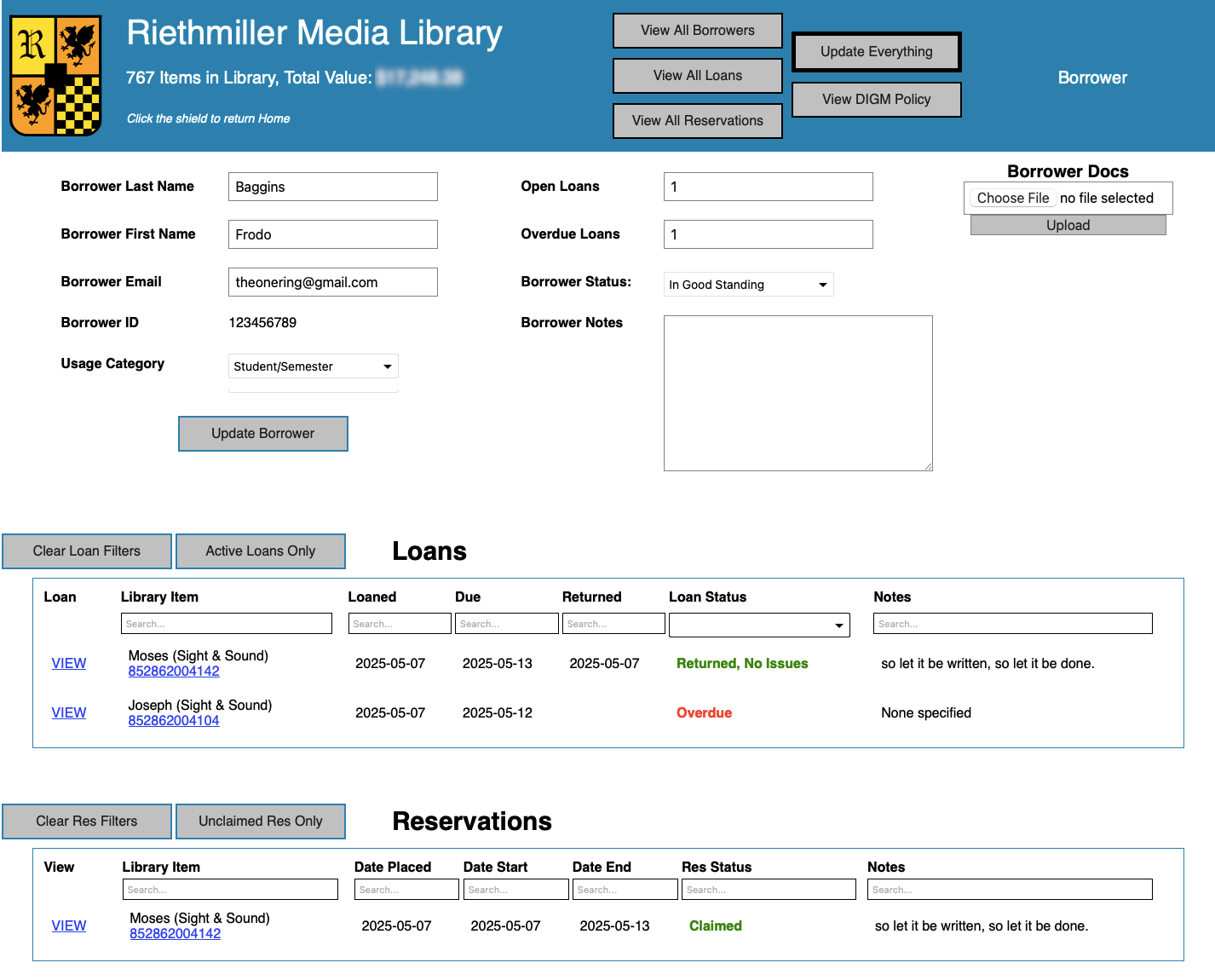
objects to track Borrowers, Discs, Loans, and Reservations.
- Tech Stack: PHP, SQL, HTML/CSS
Background & Business Problem
- Developed to support a community college film studies and digital media program managing a combined personal/academic collection of ~800 media discs.
- Required a reliable checkout system to track physical loans to students while monitoring asset collection values.
Key Features & Engineering Capabilities
- Data Architecture: Uses relational table objects to track Borrowers, Discs, Loans, and Reservations. Automatically calculates total library valuation across all items.
- Student ID Integration: Scans student ID card barcode numbers directly into the system as unique usernames.
- Risk Management: Allows administrators to flag borrowers, such as "In Good Standing" versus "High Risk / Delinquent," to manage material retrieval before graduation.
- Reservation System: Features an automated scheduling engine that checks disc availability dates and allows users to reserve items in advance.
User Interface & Operations
- Interface includes dashboard overviews for active loans, total inventory, borrower statuses, reservation calendars, and detailed item views with direct metadata/pricing lookup.
| https://github.com/driethmiller/Riethmiller_DVDlib | ||
|
|
|
|
|
|
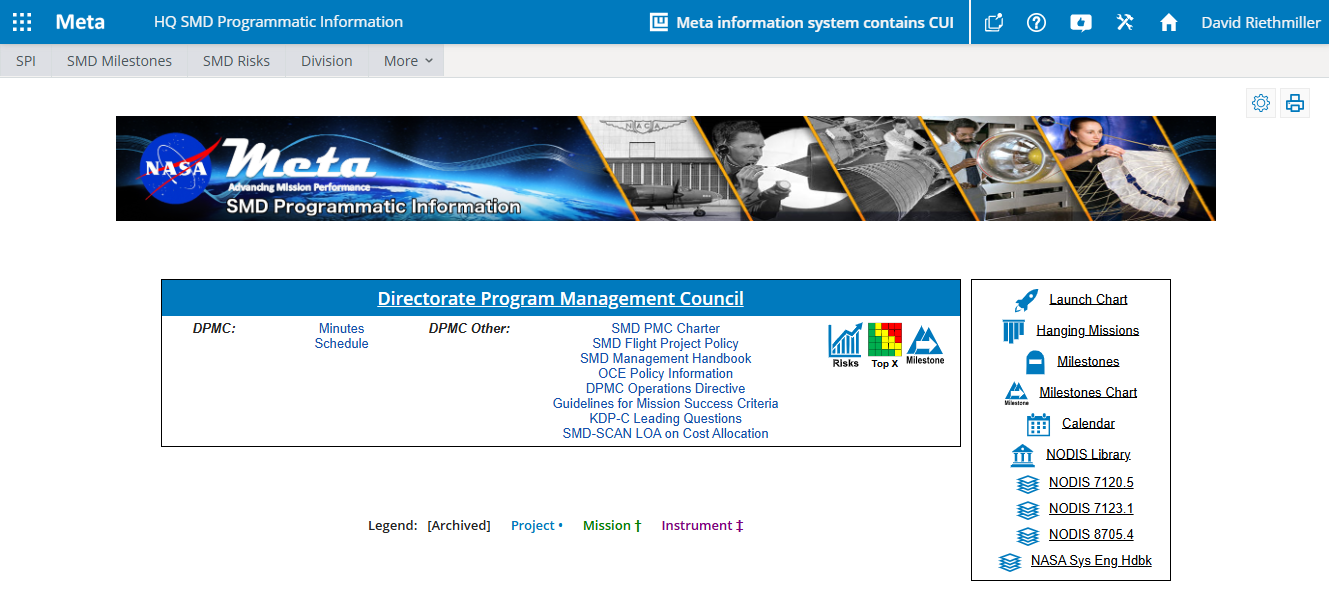 NASA HQ SPI - 2019
(Science Mission Directorate Programmatic Information)
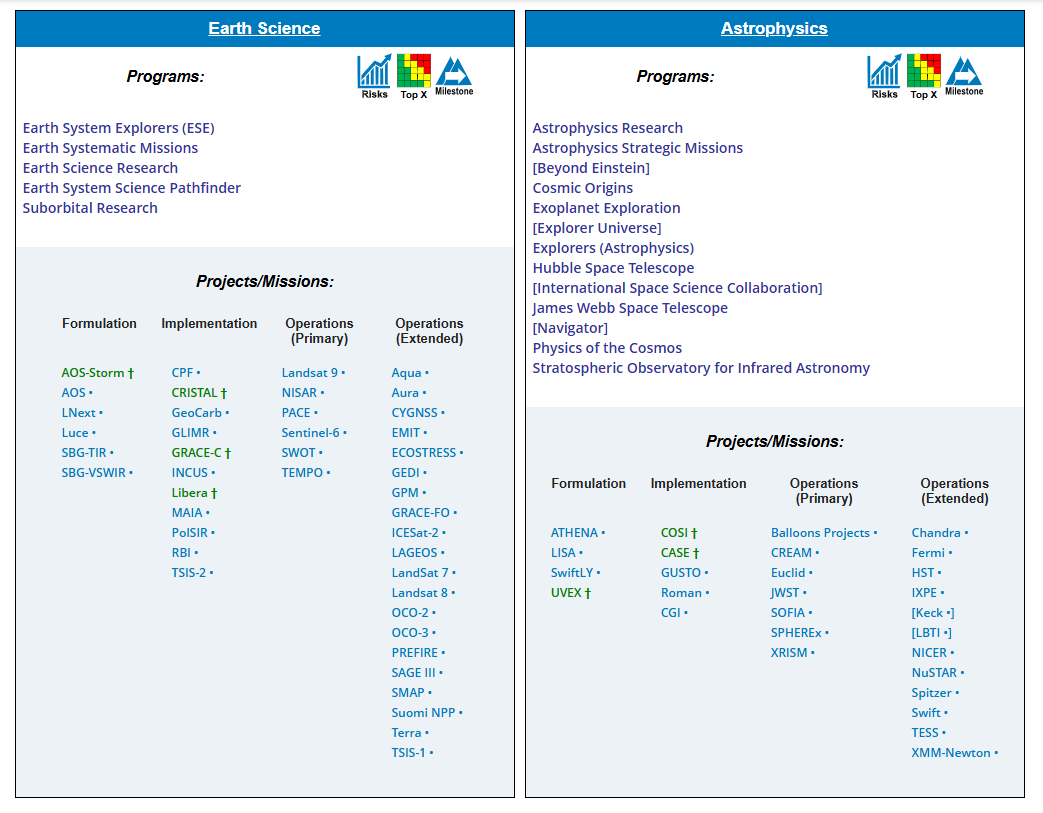
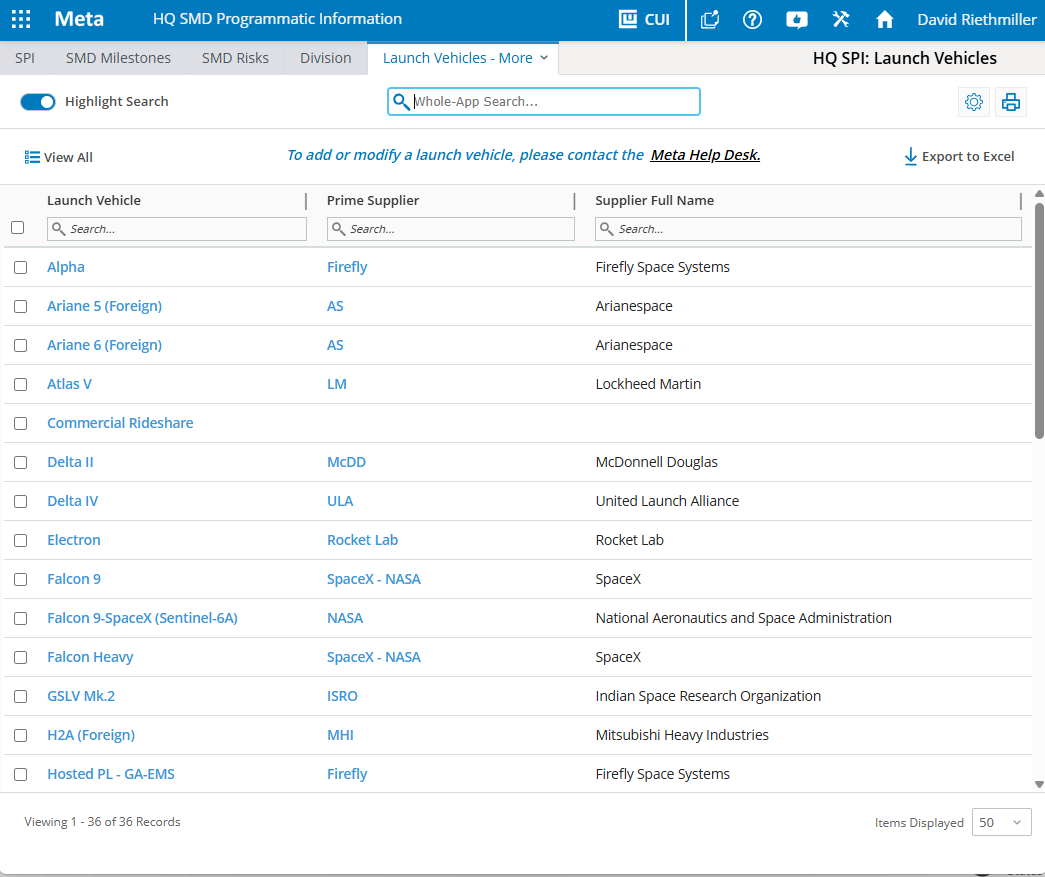
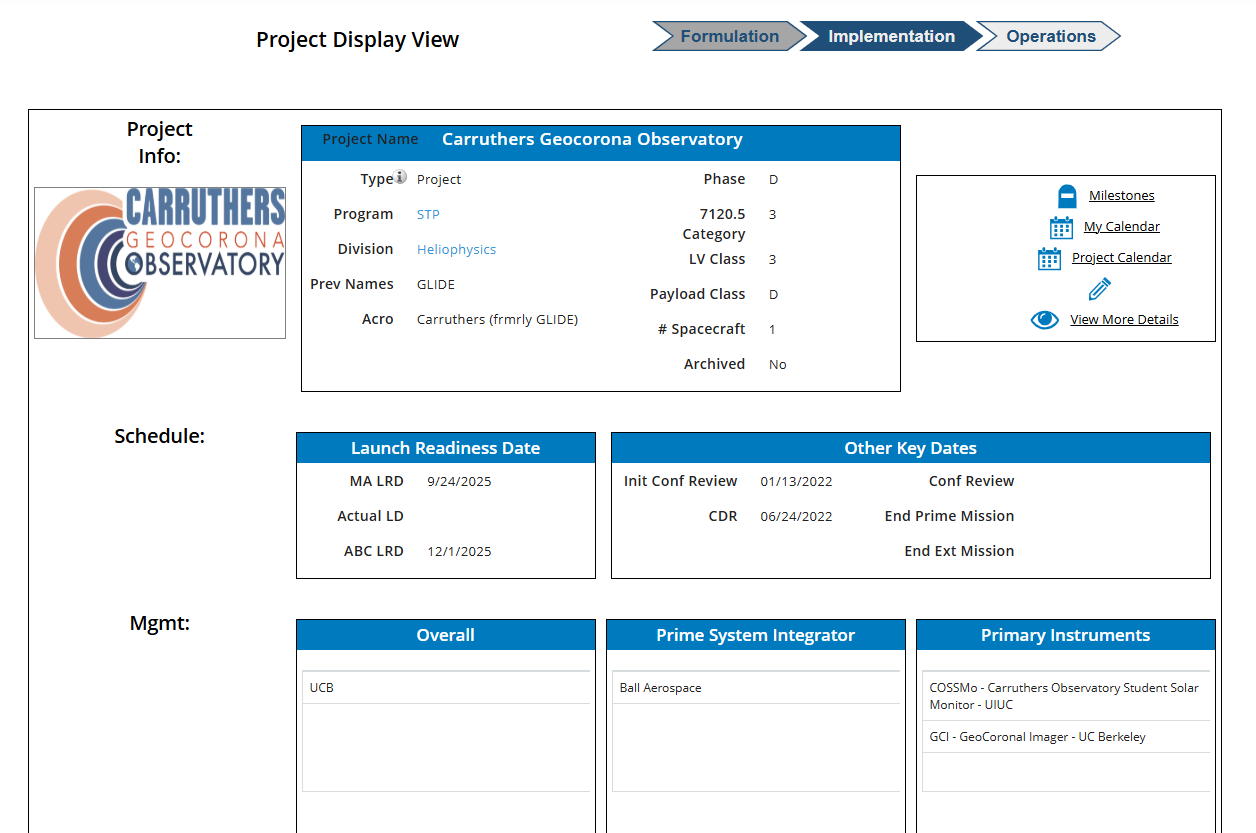
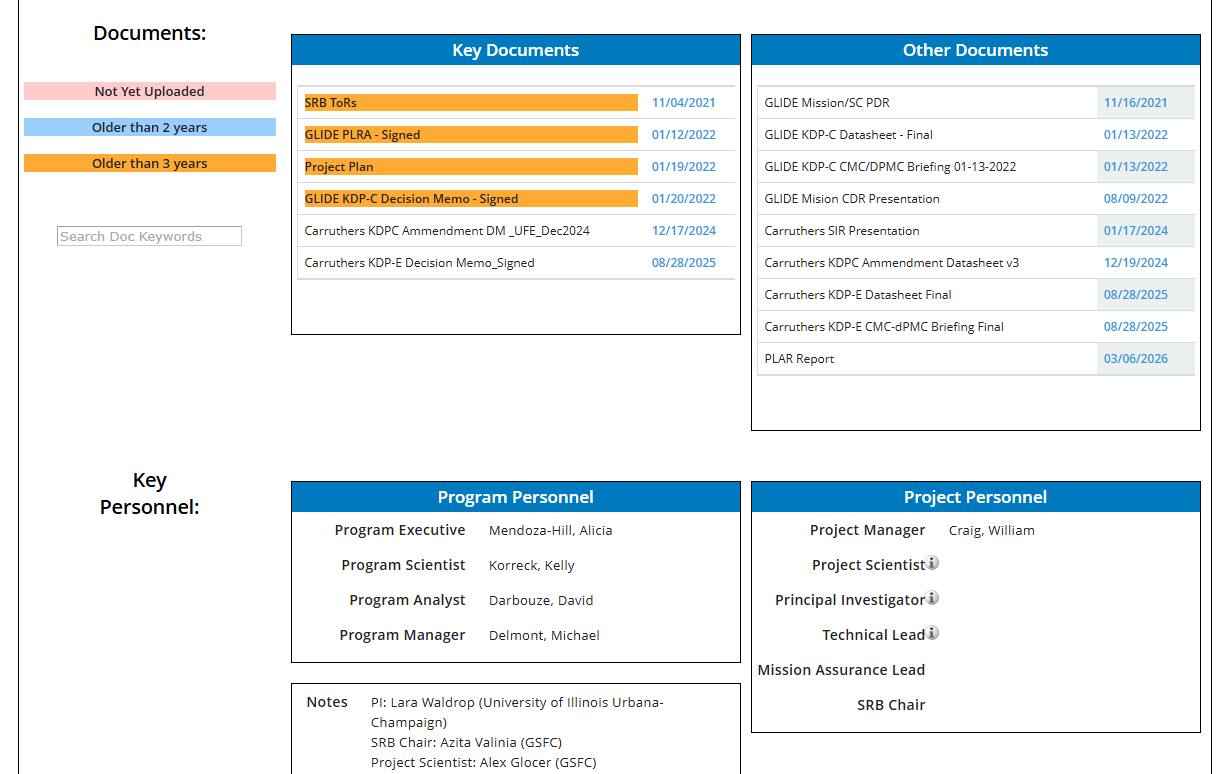
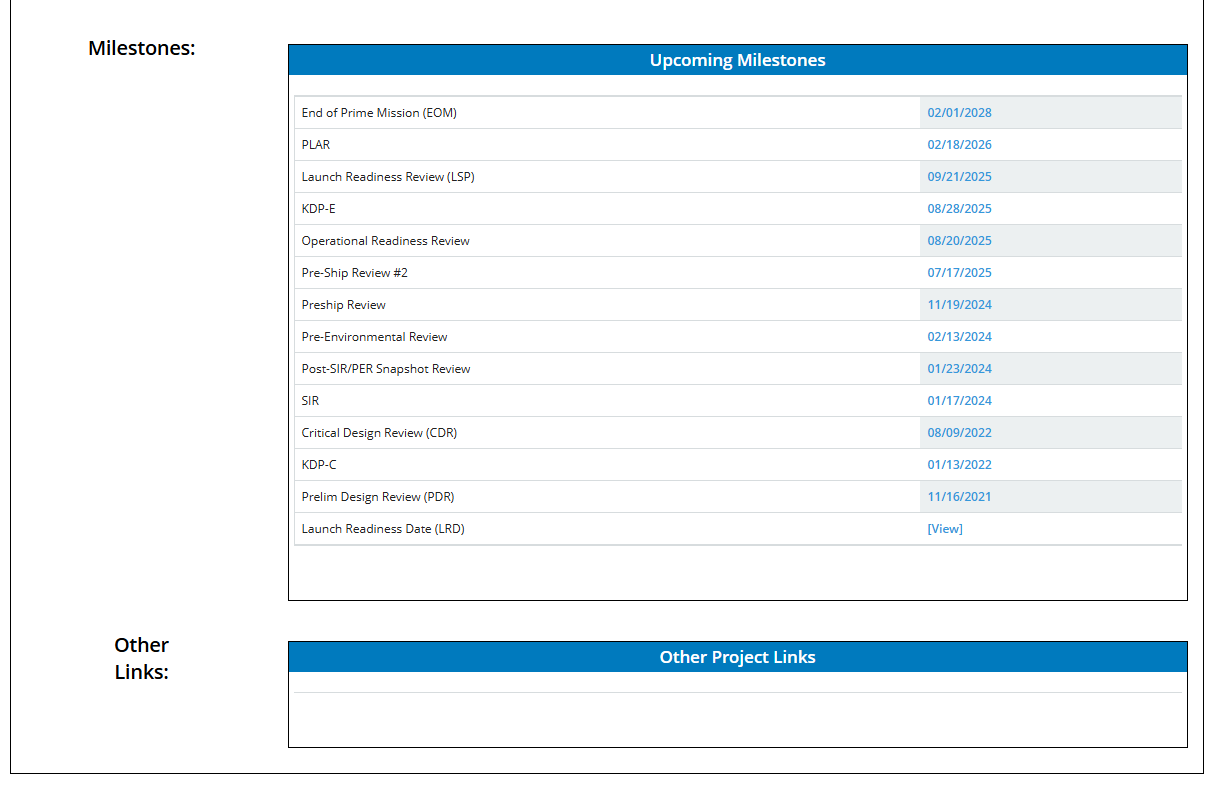
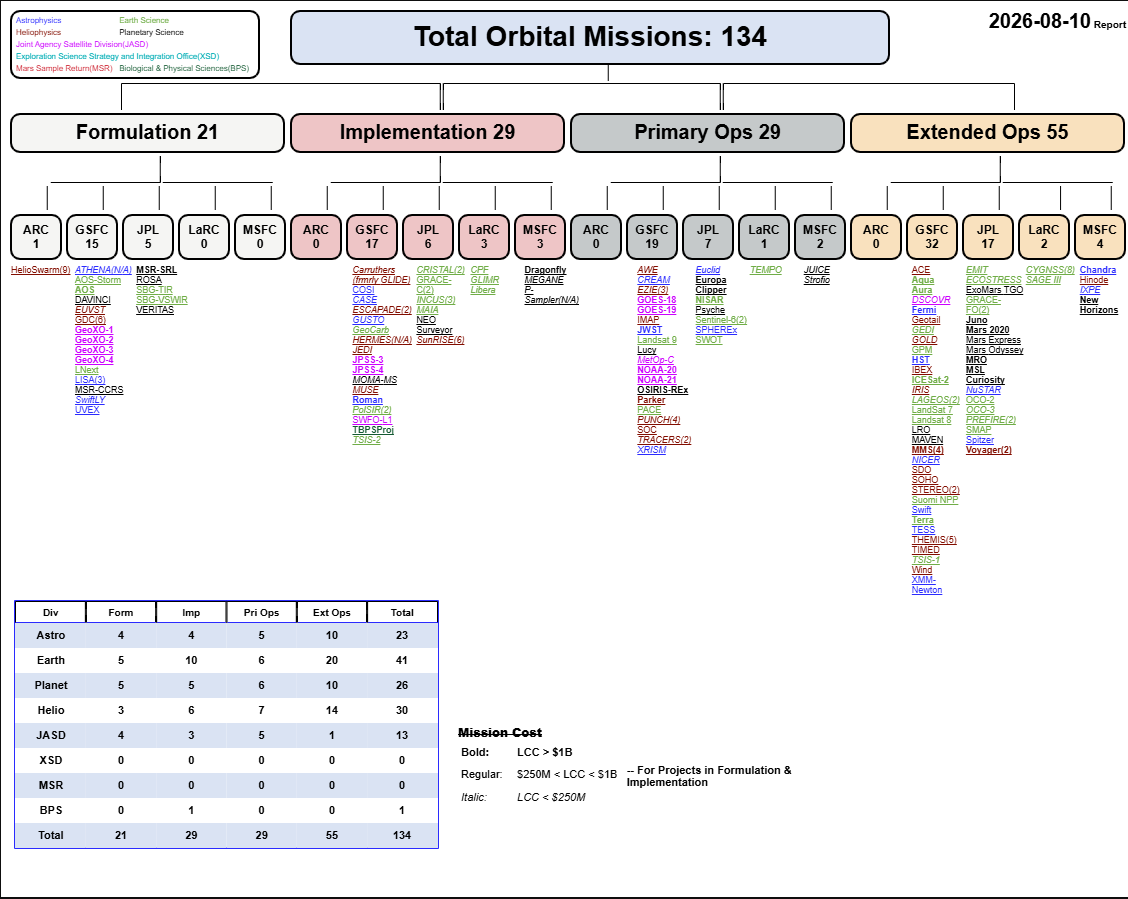
Our software team rebuilt a data interface for NASA Headquarters to track missions,
personnel, launch dates, and launch vehicles in such a way that the new interface
appeared identical to the old user-familiar interface, but with improved functionality.
- Domain: NASA Headquarters / Enterprise Systems
- Tech Stack: HTML, CSS, JavaScript, SQL Database Platform
Background & Business Problem
- NASA HQ previously relied on "ScienceWorks," a legacy system with isolated data silos that hindered cross-platform synchronization of mission schedules, launch vehicles, and personnel
- The goal was to migrate and integrate ScienceWorks data into a modern platform while maintaining a familiar interface for HQ personnel
Key Features & Engineering Capabilities
- Seamless UI Migration: Replicated the exact legacy ScienceWorks visual interface using modern web technologies (HTML/CSS/JS), providing a seamless transition where users experienced identical visual flows with improved performance
- Integrated Data Model: Connected previously siloed HQ data to broader platform databases, automatically syncing mission statuses, programs, divisions, and launch systems
- Milestone & Personnel Tracking: Categorizes missions under programs and divisions, enabling HQ administrators to assign and track progress toward milestone events and manage assigned personnel
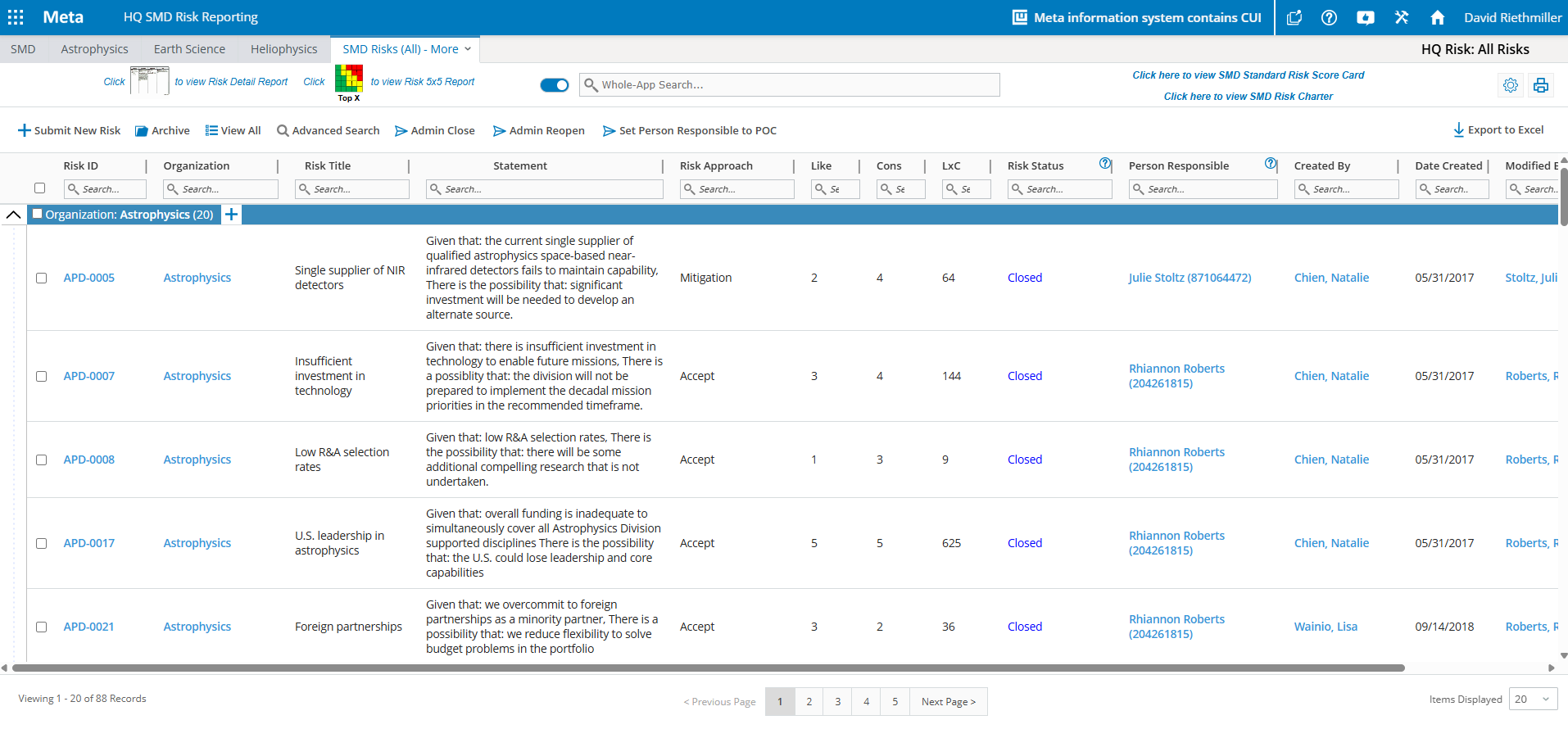
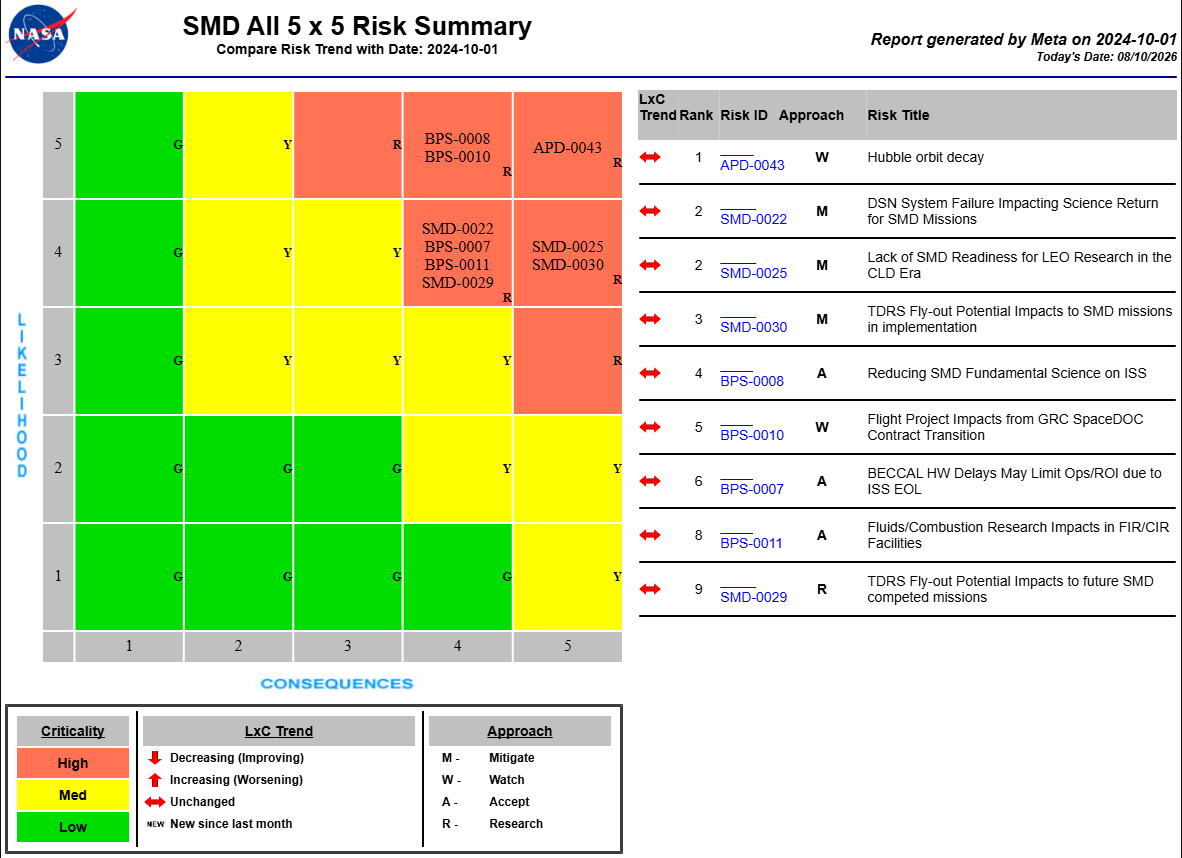
- Quantitative Risk Analysis Engine: Built custom risk management tools allowing users to score and rank project risks by evaluating likelihood and consequence values via standard mathematical models, including 5x5 Risk Matrix heatmaps
Operational Impact
- Enables real-time reporting across orbital missions, including tracking Formulation, Implementation, Primary Ops, and Extended Ops phases across field centers like GSFC, JPL, LaRC, and MSFC
|
|
|
|
|
|
|
|
|
|
 High-Energy Astrophysics Simulator (HEASim) - 2018
While working on the Astro-H/Hitomi x-ray mission at Goddard Space Flight Center,
I helped develop a simulator tool in C++ and Python to mimic the expected output of several known
x-ray telescopes, given various input parameters. The idea is that an astronomer
seeking observation time on such a telescope could use this tool to write and submit
proposals for time and funding.
Loewenstein, M.; Angelini, L.; Riethmiller, D.; Dutka, M.; Hill, R.; Witthoeft, M.; Yaqoob, T.:
Heasim and Skyback Simulation Tools, and their Application to the Hitomi Mission.
Journal of Astronomical Tele- scopes, Instruments, and Systems. October 2018, Volume 4, Issue 4.
- Domain: Astrophysics / Space Telemetry Simulation (Astro-H / Hitomi Mission)
- Tech Stack:C++, Python
Background & Science Use Case
- Science teams submitting proposals for competitive X-ray telescope observing time required a tool to model expected astronomical outputs prior to actual telescope allocation
Key Features & Engineering Capabilities
- Multi-Telescope Simulation Engine: Accepts instrument specifications from known X-ray satellites (e.g., Chandra, XMM-Newton, Astro-H/Hitomi) alongside target parameters to generate synthetic observation data
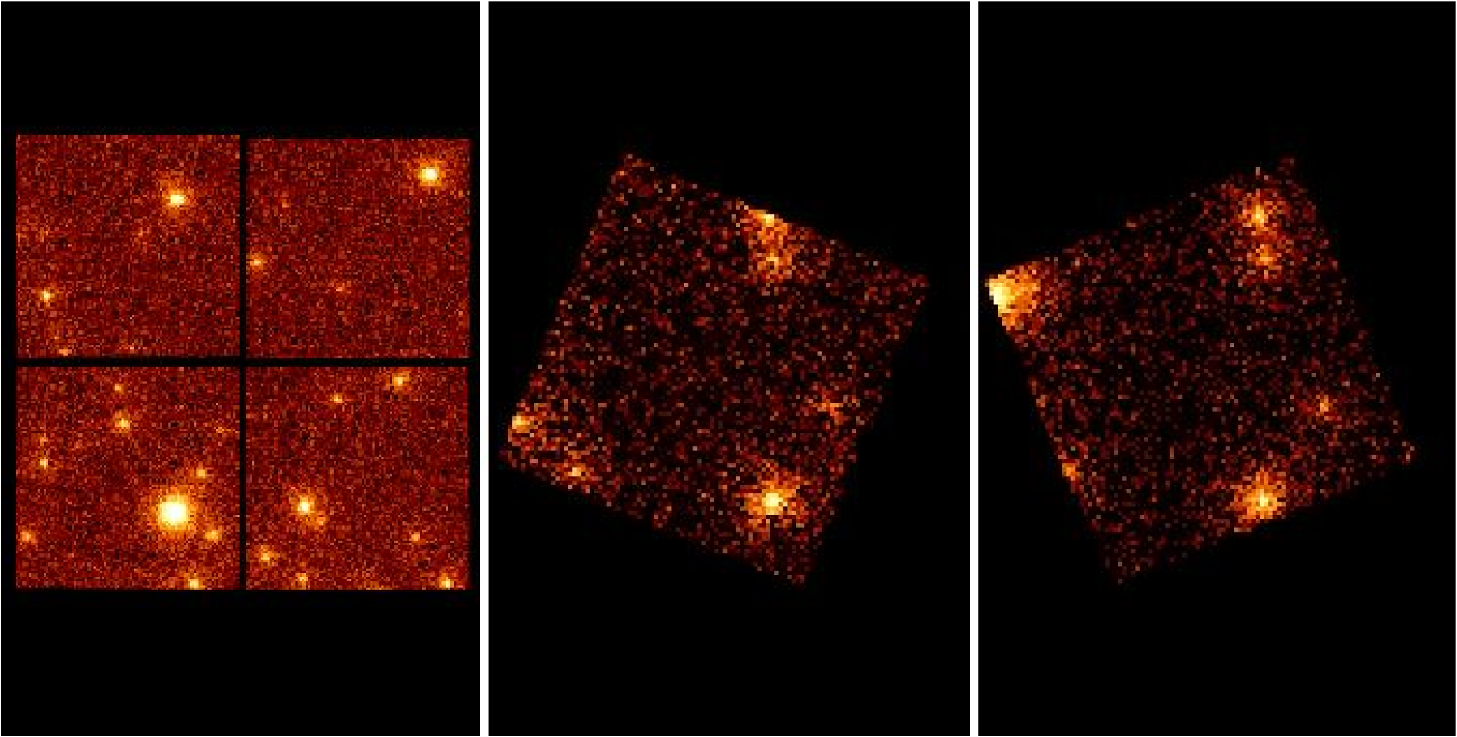
- Data Synthesis & Modeling: Generates simulated spatial photon images and energy spectra graphs that mimic real space telescope observations
- Proposal Validation: Provides researchers with benchmark simulation data to validate theoretical models against proposed telescope observations
 |
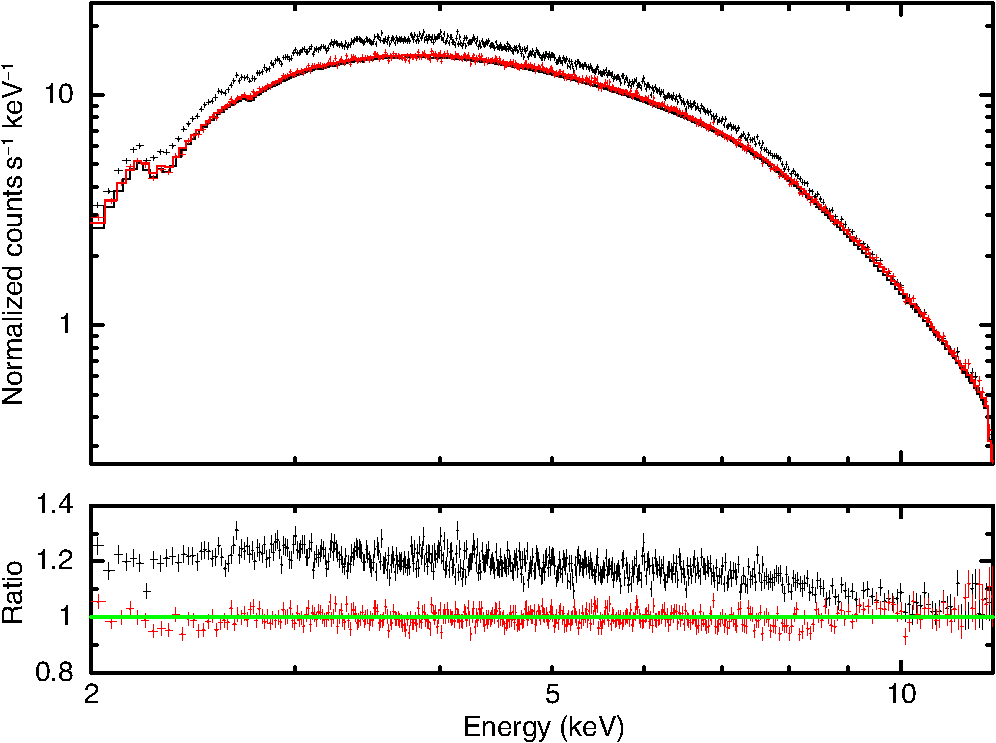 |
| Simulated images of the cosmic x-ray background as "observed" by the Hitomi spacecraft. | Observed (black, upper) and simulated postlaunch (red, lower) HP + MP Crab spectra and their ratios with respect to the model input into the simulator (histogram). |
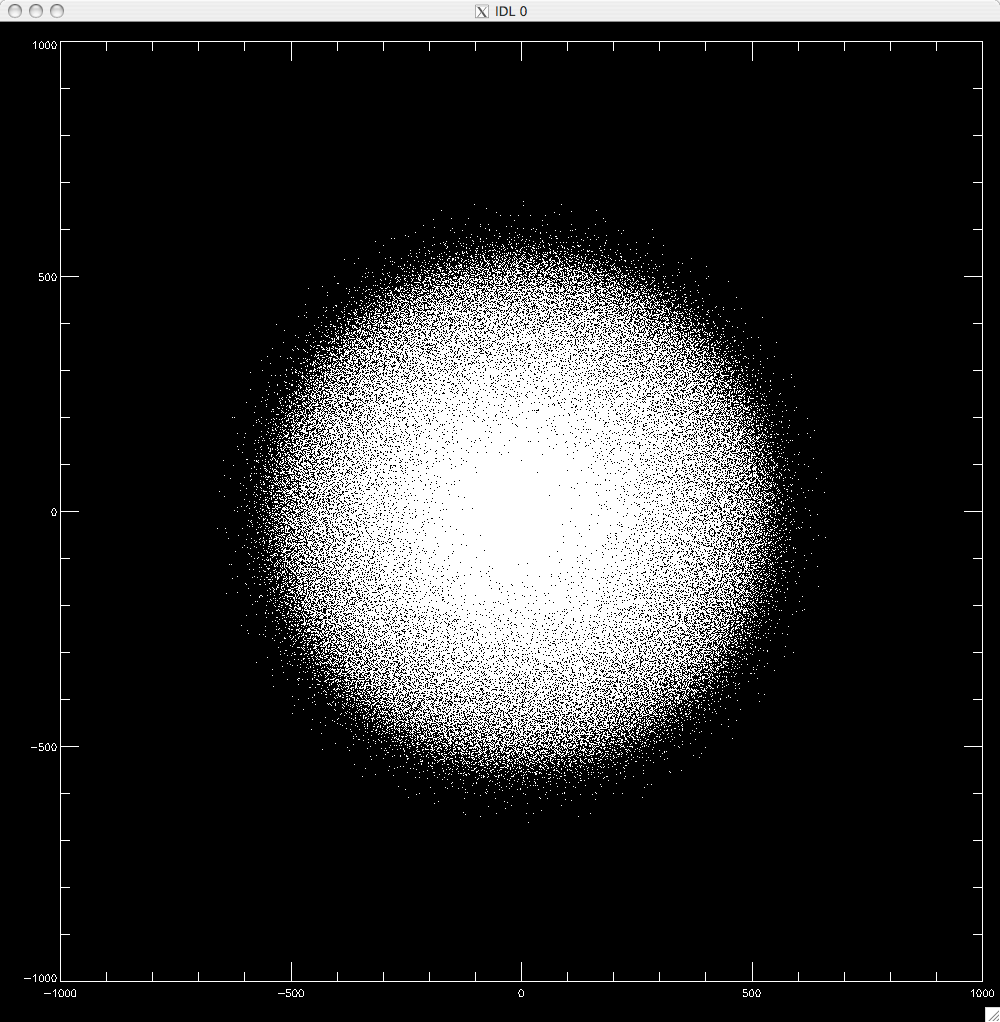 Graduate Work: Simulations of Elliptical Galaxies - 2013
My graduate work involved studying the evolution of elliptical galaxies by
modifying the publicly available GADGET2 code, a fluid hydrodynamics code written
in C, to model galactic gas and dark matter as millions of particles. I also developed
code in IDL to generate the initial conditions for this gas and dark matter - the mass
density distribution and velocity dispersion as a function of radius.
The simulation then advanced through time and moved the particles according to the
appropriate force law. Code was optimized for parallel computing by spreading
bookkeeping for the particles across multiple nodes of a supercomputer.
My thesis consisted of user guides for the Gadget2 code itself, and for initial conditions generation for gas and dark matter particles.
My thesis consisted of user guides for the Gadget2 code itself, and for initial conditions generation for gas and dark matter particles.
- Domain: Computational Astrophysics / Galaxy Evolution Simulation
- Tech Stack: C, IDL, GADGET-2, High-Performance Computing
Background & Science Use Case
Graduate research focused on modeling the dynamical evolution of elliptical galaxies by simulating the interaction of galactic gas and dark matter over time.
Key Features & Engineering Capabilities
- Simulation Code Extension: Modified the publicly available GADGET-2 hydrodynamics code, written in C, to support galaxy-scale simulations representing gas and dark matter as millions of particles.
- Initial Conditions Modeling: Developed IDL-based tooling to generate mass-density distributions and velocity-dispersion profiles as a function of radius for both gas and dark matter components.
- Numerical Evolution Engine: Configured simulations to advance particle systems through time using appropriate force laws and astrophysical boundary conditions.
- High-Performance Computing Optimization: Optimized particle bookkeeping and workload distribution across multiple supercomputer nodes to support parallel execution at large simulation scales.
Research Deliverables
Produced thesis documentation including user guides for the GADGET-2 simulation workflow and the custom initial-condition generation pipeline for gas and dark matter particles.
|
|
|
| Starting configuration for a galaxy simulation using a method known as smoothed particle hydrodynamics (SPH). Each dot represents a gas particle carrying information about position, velocity, acceleration, internal energy, entropy, pressure, and density. There are 100,000 dots in this particular simulation. | Mass density, velocity dispersion, and anisotropy parameter plots for the N-body dark matter starting conditions resulting from my initial conditions code. |
Web page and source code © David Riethmiller